Processing of Textile Fraction

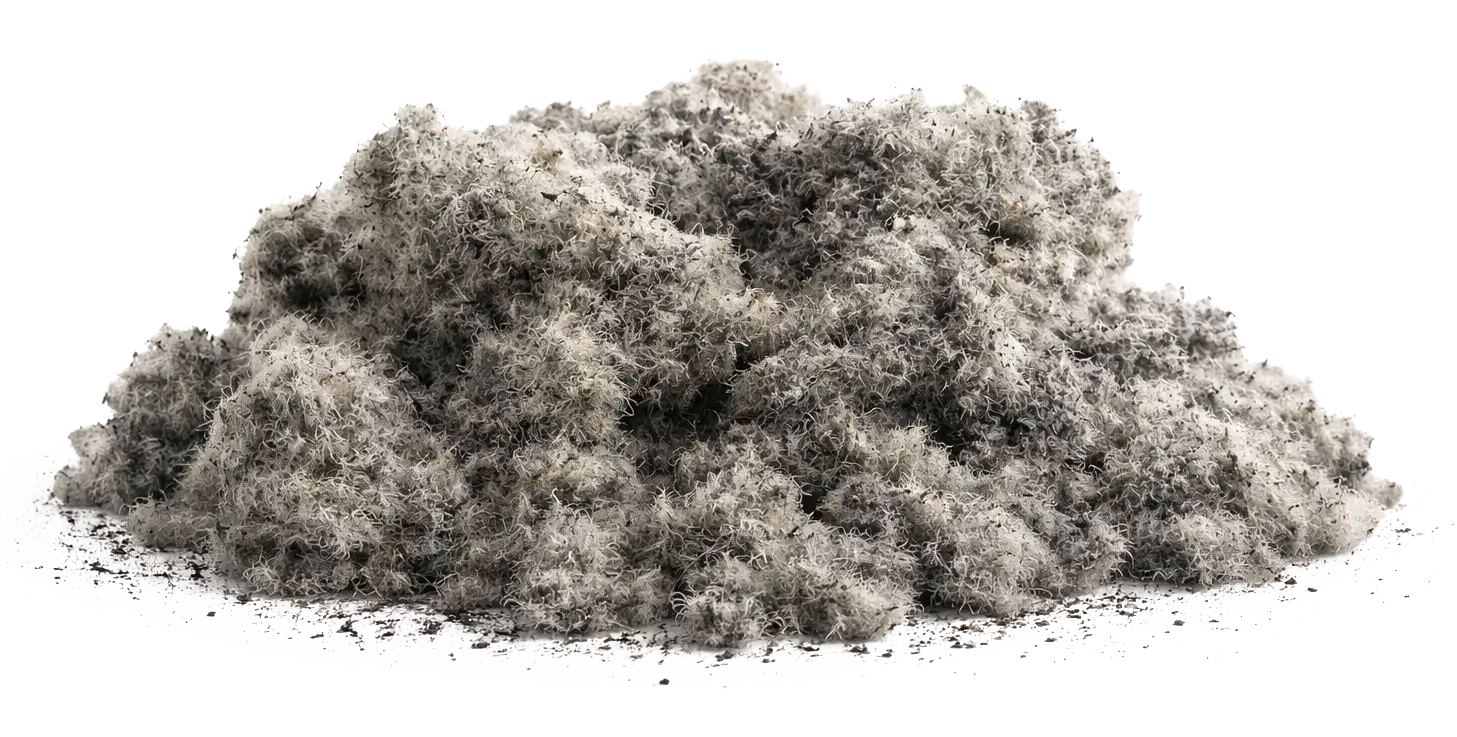
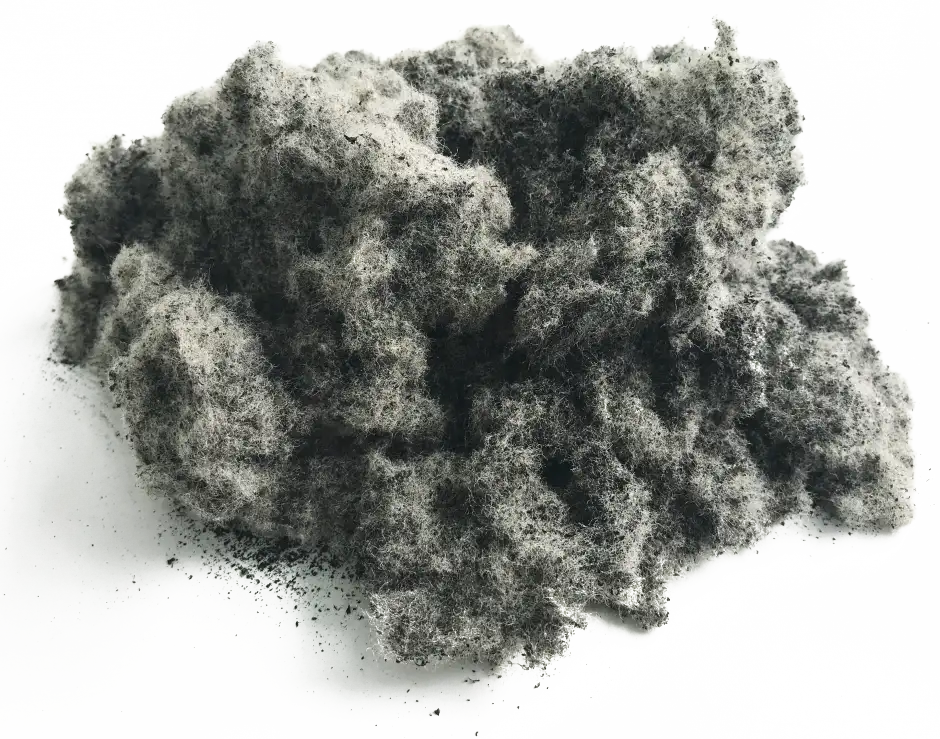
The textile fraction arising from tire recycling is a lightweight, bulky and multi-layered material composed of a blend of technical fibres and a proportion of rubber.

The textile fraction is also significant from a circular economy perspective, as it opens a pathway to valorising the part of the tire that has long been considered the most difficult to recycle. Rather than being used for energy recovery, it can be processed into products with higher added value, thereby reducing material loss and increasing the overall efficiency of tire recycling. It thus represents a further step towards returning all tire components to practical use.

Textile Fraction

The textile fraction arising from tire recycling is a lightweight, technically interesting material with growing potential for further use. It consists of a blend of technical fibres — including aramid, nylon, polyester and rayon — combined with a proportion of rubber. In tire processing, it accounts for approximately 10% of the total output, representing around 100 kg of textile fraction per tonne of end-of-life tires.
From 1 tonne of ELT
100kg
Textile Fraction

Features

The most distinctive characteristic is its excellent thermal insulation and acoustic performance. Technical studies confirm that tire-derived textile fibres exhibit strong insulation properties compared with materials such as rock wool and mineral wool, and specialist research further confirms the potential of these fibres for thermal insulation, sound absorption and composite applications. In practice, this means the textile fraction is attractive wherever noise attenuation, reduced heat transmission and low weight of the final product are important.

A further advantage of the textile fraction is its low bulk density, flexibility and ability to form a compact yet still fibrous structure. As a result, it can be processed not only in loose bulk form but also into pressed or compressed mats, boards and filling layers. Material prepared in this way is suitable for, among other things, building insulation, acoustic elements, filling layers, composite products and technical applications combining a mechanical function with a requirement for low weight.

From a materials perspective, the textile fraction is also interesting in that it is not a homogeneous product but a blend of various synthetic and high-tenacity fibres. This gives it good potential for reinforcing, strengthening and improving selected properties of other compounds — for example in construction, geotechnics or composite manufacturing. The scientific literature cites the use of these fibres in soil reinforcement, cement and mortar mixes, and other structural materials, where they can enhance strength, stability or energy absorption.
Application Possibilities…
Further Applications of

Textile fraction

Endless possibilities for secondary processing.

Acoustic and Insulation Mats
Textile fraction from ELT is suitable for the manufacture of acoustic and insulation mats that help attenuate noise and reduce heat transmission. Thanks to its fibrous structure and low bulk density, this material is attractive for technical insulation, interior applications and building elements. In practice, it can replace conventional absorbent cores in products where sound absorption, comfort and sustainable material origin are important. Studies confirm excellent insulation properties of the textile fibres and their use in both loose fraction and pressed mat form.
Noise Barriers Along Roads and Railways
One of the most practical applications is as fill material in road and railway noise barrier panels. Recycled textile fraction is used here as an acoustically effective material that helps reduce the propagation of traffic noise. The advantage is that it can serve as a substitute for traditional absorbent cores without requiring major changes to panel construction. Such solutions combine technical functionality with environmental benefit, giving material recovered from tires a new, long-term application.
Automotive Noise and Heat Attenuation
Textile fraction also has significant potential in the automotive industry, particularly for solutions focused on noise, vibration and harshness (NVH) attenuation and thermal separation. It can be used in constructions aimed at increasing cabin acoustic comfort while maintaining low component weight. It is suitable as a supplementary material in layered components, padding and technical insulation elements. In the automotive sector, textile fraction supports a quieter interior and a higher level of user comfort.
Floor Systems and Impact Sound Insulation
Textile fraction can be used as a functional layer in flooring systems, underlays and technical floor assemblies. It helps reduce impact sound transmission and improve acoustic comfort in residential, office and public spaces. Thanks to its structure, the material performs well in products requiring a combination of flexibility, attenuation and ease of processing. Recycled textile mats are used in flooring systems, where the material integrates seamlessly into standard assemblies without the need for fundamental redesign.

"Jedinou hranicou je Vaša predstavivosť . . ."

Resumo s.r.o.

An innovative method of recycling worn and discarded truck tires, production of rubber granulate and reclaimed rubber – so-called Masterbatch.
Contact us
chevron-down-circle linkedin facebook pinterest youtube rss twitter instagram facebook-blank rss-blank linkedin-blank pinterest youtube twitter instagram